
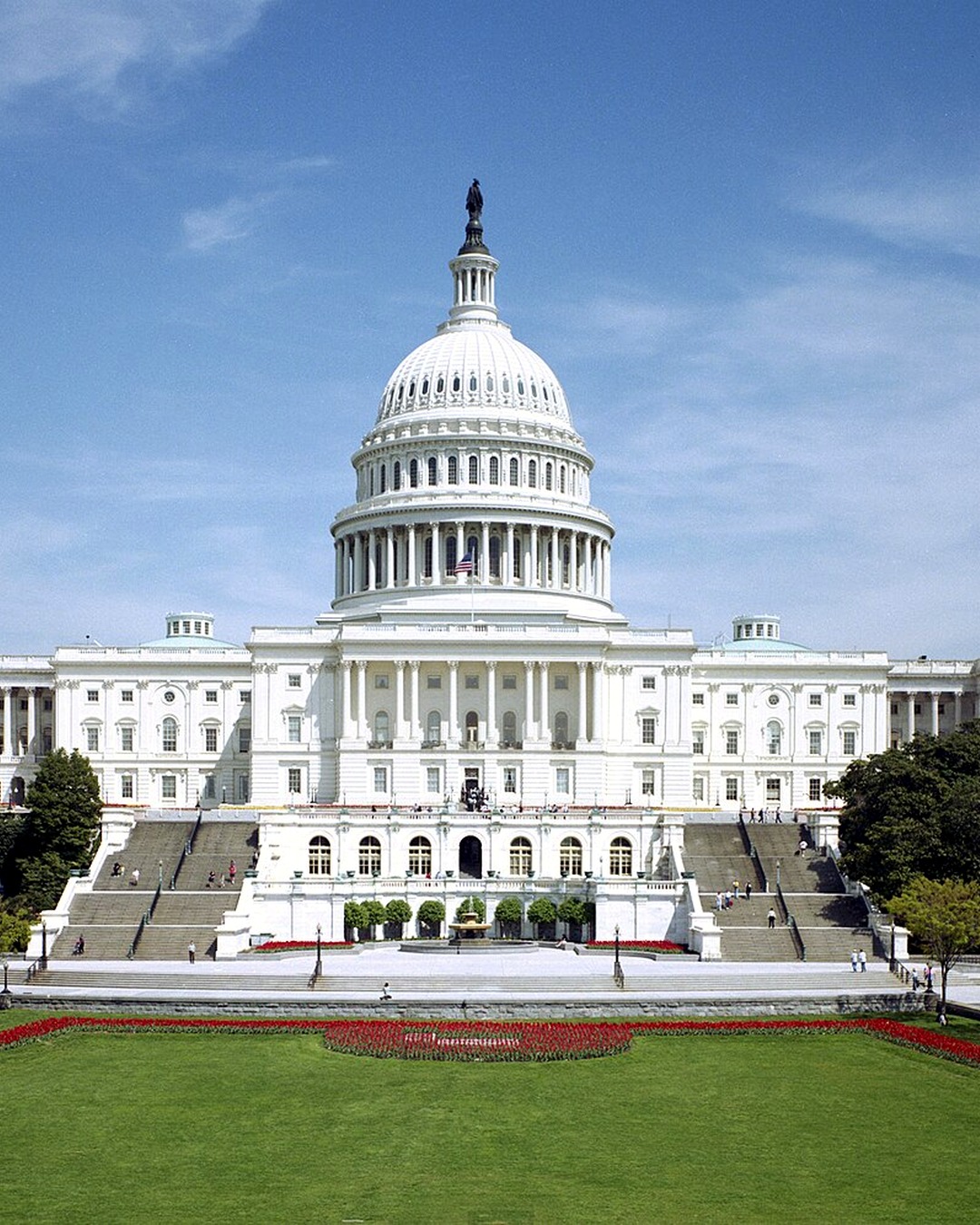
America voted on Tuesday, and Washington woke up on Wednesday a different place. The Democratic Party has won control of both the United States House of Representatives and the United States Senate, ending two years of Republican control of Congress and setting up divided government for the final two years of President Donald Trump’s term. For the millions of Jamaicans and Caribbean people who live in the United States, or who have family, business and plans tied to it, this is the plain guide to what happened, what is still undecided, and what it actually means for you.
The headline result
The Associated Press has called control of both chambers for the Democrats. In the House, where all 435 seats were up for election, Democrats had won 222 seats in the races called by Wednesday morning, more than the 218 needed for a majority, against 138 for Republicans, with dozens of districts still counting. NBC News projected on Wednesday morning that the final Democratic majority would be larger, at least 258 seats, once the count finishes. In the Senate, Democrats will hold at least 54 of the 100 seats, counting two independents who caucus with them, to at least 44 for Republicans, with two races still uncalled. Republicans went into Tuesday holding the Senate 53 to 47. Reuters described the night as a sweeping repudiation of the president, with Democrats winning in Republican strongholds for the first time in generations.
The new Congress does not start today. The winners are sworn in on January 3, 2027, and until then the current Congress still sits. What changed on Tuesday is who will hold the power in January.
How it happened: seven Senate seats flipped
The Senate was decided in states Republicans expected to hold. Democrats flipped seven Republican held seats and lost none of their own, according to the Associated Press.
In Texas, state representative James Talarico defeated Attorney General Ken Paxton with about 55 percent of the vote to 43, becoming the first Democrat to win a Texas Senate seat since 1988. CNN reported it was the most expensive Senate race in United States history. In Kansas, megachurch pastor Adam Hamilton defeated Senator Roger Marshall, becoming the first Democrat elected to the Senate from Kansas since 1932. In South Carolina, pediatrician Annie Andrews defeated incumbent Senator Darline Graham, the first Democratic Senate win in that state since 1998. In Iowa, Josh Turek defeated Representative Ashley Hinson. In Ohio, former Senator Sherrod Brown completed a comeback, defeating Senator Jon Husted. In North Carolina, former governor Roy Cooper defeated Michael Whatley. And in Maine, Troy Jackson defeated Susan Collins, the five term Republican senator. In Michigan, a Democratic held open seat stayed Democratic: Abdul El-Sayed won, and will become the first Muslim senator in United States history.
The voter surveys explain the weather behind the results. In the Associated Press Voter Poll, the economy was the top issue for about four in ten voters, ahead of the future of democracy at about three in ten. The NBC News and CBS exit polls both put President Trump’s approval among midterm voters at 38 percent, and about seven in ten voters said Congress should do more to check the president. Half of voters told pollsters they saw the election as an opportunity to rebuke him. Across the coverage, the same drivers kept appearing: high prices, the war in Iran that began eight months ago, and the tariffs.
The White House answered in two different voices. The president posted on Truth Social: “I wasn’t on the Ballot and if I was, we would have won IN A LANDSLIDE!” He told the Wall Street Journal the Iran war was a “piece” of the losses, and said of the war: “I did the right thing. I would have done it again.” Vice President JD Vance, posting on X on Wednesday, was blunter: “The reason we lost is the war,” according to Reuters.
The governors: five flips and a night of firsts
The statehouses moved too. Democrats flipped five governorships: Texas, Georgia, Ohio, Iowa and Nevada, and will hold at least 27 of the 50 governor’s offices when the winners take over.
In Texas, Gina Hinojosa defeated three term Governor Greg Abbott, becoming the state’s first Latina governor. In Ohio, Dr. Amy Acton, the former state health director, defeated Vivek Ramaswamy; she will be Ohio’s first elected female governor, and the first Democrat elected to the office since 2006. In Iowa, Rob Sand flipped the seat for the Democrats. In Nevada, Attorney General Aaron Ford unseated Governor Joe Lombardo.
Then there is the history. When the winners are sworn in, five Black governors will serve in the United States at the same time for the first time ever. Before Tuesday, only three Black Americans had ever been elected governor in the country’s history, and no two had ever served at once. The five are Wes Moore of Maryland, re-elected in a rematch the Associated Press called early in the evening; Byron Donalds of Florida, who defeated David Jolly, succeeds Ron DeSantis, and becomes the first Black Republican ever elected governor; Keisha Lance Bottoms of Georgia, the former Atlanta mayor, who becomes the first Black woman ever elected governor of any state; David Crowley of Wisconsin, the Milwaukee County executive, who at 40 becomes the youngest governor in the country; and Aaron Ford of Nevada. The governorships in Alaska and Kansas were still uncalled on Wednesday morning.
The Jamaican connection
Three of the night’s biggest winners carry Jamaican roots, and the diaspora knows all three names.
Yvette Clarke was re-elected in New York’s 9th Congressional District in Brooklyn, one of the most Jamaican districts in America, taking about 83 percent of the vote in the Associated Press count. Clarke is the daughter of Jamaican immigrants, she chairs the Congressional Black Caucus, and she has represented Brooklyn in the House for nearly two decades. She now sits in a House her party controls.
Wes Moore, whose mother was born in Jamaica, was re-elected governor of Maryland, the state that made him only the third Black governor ever elected in America when he first won in 2022. Byron Donalds, also of Jamaican heritage, is the governor elect of Florida, home to one of the largest Jamaican communities in the world outside Jamaica itself. Brooklyn, South Florida and Maryland are three of the great capitals of the Jamaican diaspora, and all three now send people with Jamaican roots to the very top of American politics.
What this means for the diaspora
This is the part that matters most, so here it is plainly, with nothing added.
Nothing changes overnight. The new Congress is sworn in on January 3, 2027. No pending visa application, green card case or citizenship case changes because of this election, and case processing continues under the existing law. Anyone with a live case should keep following official notices from US Citizenship and Immigration Services and the State Department, as before.
What a Democratic Congress does get, from January, is the power to look. Committees in both chambers can hold oversight hearings into the Department of Homeland Security and USCIS, the agencies that run immigration enforcement and process applications, and they can call officials in to answer questions in public. That matters because the politics around enforcement have shifted: the NBC News exit poll found that more than half of voters said immigration enforcement has gone too far. Congress also controls the money. The spending bills of 2027 will set the budgets for case processing and for enforcement, and those fights will tell us more than any speech. And the Senate confirms the officials and judges who shape immigration policy, so every senior appointment from January onward runs through a Democratic Senate.
What does not change is just as important. The president keeps the veto, and neither party has the two thirds needed to override one, so no new law passes without his signature or a deal. Executive authority over entry into the United States, over visas issued at consulates, and over enforcement priorities stays with the president and his agencies. The honest summary is this: the people who will question, fund and confirm the immigration system have changed. The system itself, and every case inside it, continues exactly as it did on Monday.
What is still open, and what happens next
Two Senate races were still uncalled on Wednesday morning: Alaska, where Senator Dan Sullivan faces Mary Peltola and the ranked choice count is scheduled for November 18, and Mississippi, where the race sits dead even. Dozens of House districts are still counting, and the Alaska and Kansas governor’s races are open. Every result becomes official only when its state certifies the count, which takes days to weeks. The new Congress is then sworn in on January 3, 2027.
Nation family, we want to hear from you: what do you want this new Congress to tackle first for the diaspora?
Photo: Architect of the Capitol, via Wikimedia Commons
Leave a Reply