
A year after the strongest storm ever to strike Jamaica directly, the numbers describe a country that was knocked back hard and is climbing, unevenly, with the diaspora carrying a share of the weight.
Hurricane Melissa made landfall near New Hope on October 28, 2025, as a Category 5 storm. A World Bank coordinated assessment put the damage at about US$8.8 billion, roughly 41 per cent of Jamaica’s 2024 GDP, according to Jamaica Homes News, in its November 1 review of the official figures from the Planning Institute of Jamaica, the Bank of Jamaica and STATIN.
An economy shrinking more slowly
The economy contracted 7.1 per cent in the quarter right after the storm, then 5.9 per cent, then 2.9 per cent, each quarter less bad than the one before, according to the Planning Institute of Jamaica figures carried by Jamaica Homes News.
The PIOJ says output could return to pre-storm levels as early as April to June 2027, and Finance Minister Fayval Williams said in September the recovery was running about 18 months ahead of schedule, according to Jamaica Homes News.
Building is leading the climb back. Cement production was up 56.8 per cent in the latest quarter as families and businesses rebuilt, according to Jamaica Homes News. The Government’s response expenditure has reached about J$84 billion, including more than J$11 billion on school repairs, with 144 of 308 Priority One schools fully repaired, Prime Minister Andrew Holness said at a briefing on October 27, according to reporting of the briefing.
The diaspora holds the line
Remittances reached US$3.49 billion in 2025, the second highest total on record and about 15 per cent of GDP, with two thirds of it from the United States, according to the Bank of Jamaica figures carried by Jamaica Homes News.
Tourism is still catching up: visitor arrivals to the end of August were 17 per cent below the same period of 2025, and STATIN’s July survey counted 1.419 million people in work, 21,900 fewer than a year earlier, according to Jamaica Homes News.

Photo credit: Hurricane Melissa crossing Jamaica on October 28, 2025, via CIRA and NOAA, Wikimedia Commons.
Watching the next storm better
One year to the day after landfall, on October 28, 2026, Jamaica commissioned a modern S-band Doppler weather radar at Cooper’s Hill, St Andrew, according to the Jamaica Information Service. The US$2.45 million system gives total islandwide coverage and played an instrumental role in tracking Melissa itself, according to the Jamaica Information Service.
This week, Jamaica is also expected to sign an agreement with the United Kingdom at the Commonwealth Heads of Government Meeting in Antigua and Barbuda, running November 1 to 4, under which both countries co-fund technical experts from Arup, Mace and Gleeds to support the National Reconstruction and Resilience Authority, according to CANA News.
The storm is a year behind Jamaica. The rebuilding, the radar and the diaspora money say the country intends to meet the next one differently.
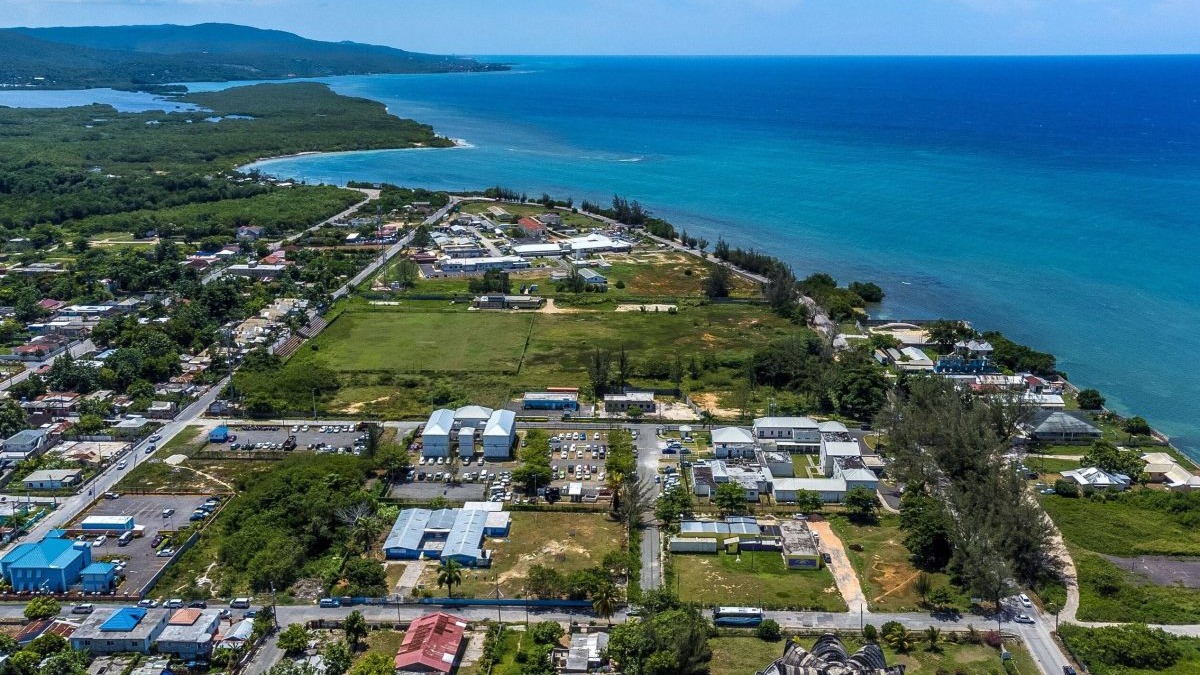
Photo credit: Black River, St Elizabeth, aerial view via Photler.
Leave a Reply